The Seat Isn't the Problem — the Process Is: Buying ADA Tickets Without the Runaround
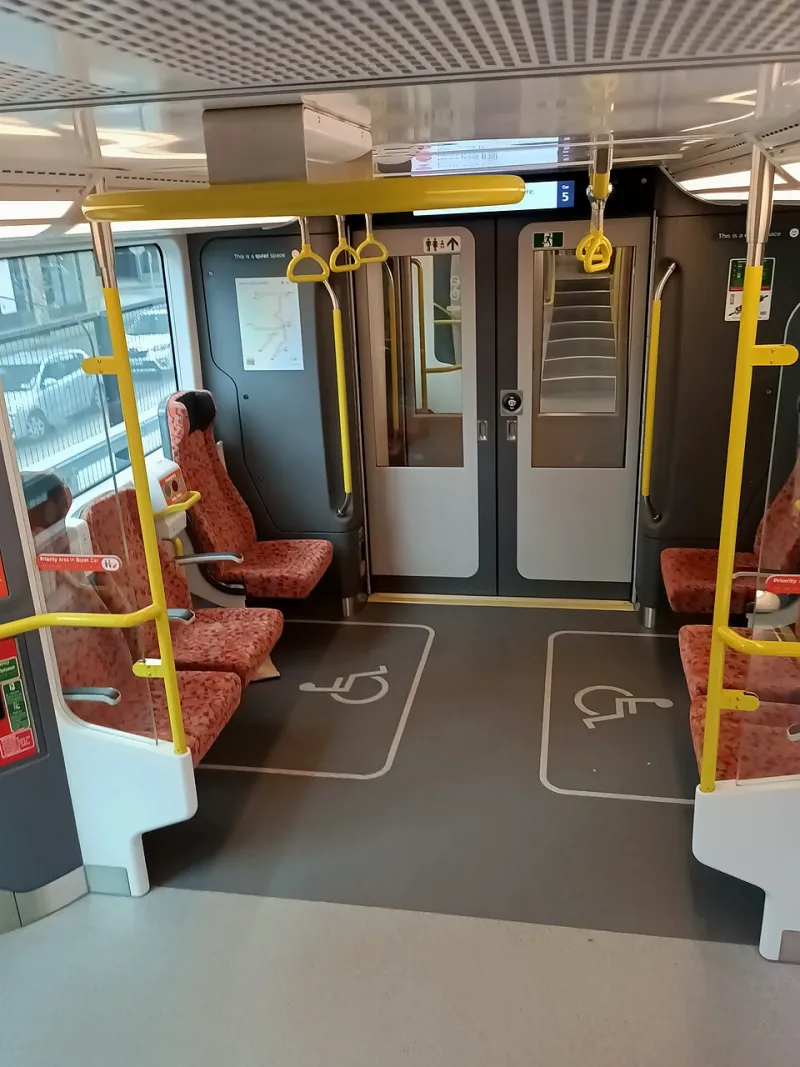
Photo: JaredMcKenzie, CC0, via Wikimedia Commons
Nothing about buying an accessible ticket should be hard. Federal rules say accessible seats have to be sold the same way as everything else, at the same prices, with companion seats next to them. In practice, the path from 'I want to go to the show' to 'I have the right seat' runs through filters that hide companion seating, phone lines that ring for eleven minutes, and seat maps that describe a wheelchair space with a tiny icon and no other information.
This is the practical version. What the labels mean, where the checkout breaks, and what to ask before your card gets charged.
First, know which kind of accessible seat you're buying
'Accessible seating' is an umbrella term that covers very different physical setups. Before you click anything, figure out which one you actually need:
- Wheelchair spaces. A designated area, usually with a level floor, where a wheelchair or mobility device stays parked during the event. Often paired with a folding companion chair beside it.
- Transfer seats. A fixed seat with a removable armrest, reachable by a short step or two, where you move out of your wheelchair and into the venue seat. Some are at the end of a row; some are not.
- Semi-ambulatory or limited-mobility seats. Aisle seats close to a step-free entrance, often with fewer stairs to reach the concourse.
- Deaf or hard-of-hearing seating. Sightline-dependent seats for ASL interpretation, captioning, or assistive listening devices — which is a separate request from the seat itself.
- Companion seats. The seat next to the accessible space. Rules vary; many venues cap it at three companions per accessible seat, and the companion seat is usually priced the same as the accessible one.
If you don't know which of these you need, don't guess at checkout. Ask the box office. A 'wheelchair accessible' filter that dumps you into a transfer seat is a very long night waiting to happen.
Where the checkout breaks
Online purchase is the default and it mostly works — Ticketmaster, AXS, and most team and venue sites now have an accessible seating filter or a dedicated accessible inventory queue. Then you hit one of these:
The companion seat vanishes. You select the accessible space, and the adjacent companion seat doesn't offer itself. Sometimes it's a filter issue, sometimes it's a genuine inventory gap. Do not buy the accessible seat alone and hope a companion seat appears later. Call the box office before you pay.
The filter hides inventory. Accessible seats are supposed to be available in every price tier and location, including premium areas. If the filter shows you one sad option in the upper deck for a show with a wide-open lower bowl, that's worth a phone call, not a shrug.
Verification gets weird. You should not have to provide medical documentation to buy a ticket, and federal rules generally prohibit requiring it at purchase. Some venues do ask for an attestation checkbox or a follow-up call from their accessibility coordinator. That's normal. Being asked to mail a doctor's note is not, and you can push back.
Resale accessible seats. This is the sharpest edge in the whole process. Accessible inventory on resale platforms is frequently unverified — the seller may have listed a seat they can't legally transfer in that configuration, or the platform may not have the data to confirm it's accessible. If your entire plan depends on the seat being accessible, buy it from the primary source or go through the venue directly.
The transfer problem. If a friend bought the tickets, transferring an accessible seat can drop flags the venue needs. Get the buyer's confirmation email and the order number, and call ahead so guest services knows a wheelchair user is in the party.
The questions to ask before you pay
Write these down and work through them with the box office or the accessibility coordinator. Ten minutes on the phone beats an hour at the gate.
- Is this a wheelchair space with a companion seat attached, or a transfer seat with a step to reach it?
- How many companion seats come with it, and are they immediately adjacent — not 'nearby'?
- What's the step-free route from the nearest entrance to this seat, and is there an elevator if the seat is above the floor?
- Is there a railing, soundboard, camera platform, or structural column in front of this location?
- Where are the nearest accessible restrooms to this section?
- Does the venue provide an escort or guest services assist from the gate?
- If the seat doesn't work on the night, what's the process for relocating — and does it require a manager?
- For ASL or captioning requests, what's the deadline, and where is the interpreted section?
- Is this seat sold at the same price as a comparable non-accessible seat in the same area?
The last one matters. Accessible seats are supposed to be priced with their section, not marked up as a specialty product. If the number looks inflated, ask.
Day-of, and the backup plan
Arrive early enough that you're not solving a logistics problem at the same time as a crowd. Know your gate, and know the name of the person who confirmed your seat if you can get one. If something is wrong when you arrive, go straight to guest services rather than the nearest usher — ushers usually can't reassign seats, and guest services can.
Keep your order confirmation and any email from the accessibility coordinator on your phone. Screenshots are fine. The paper trail is what turns a gate argument into a two-minute fix.
The short version
Filter is a starting point, not a confirmation. Companion seats don't appear on their own — ask. Resale accessible inventory is a gamble worth avoiding. And the box office is not your enemy here; the accessibility coordinator at most venues is the single most useful phone number in the building.
Get the right seat the first time, and the rest of the night is just a night out.