Tuesday Theory: The Midweek Window Where Ticket Prices Take a Breath
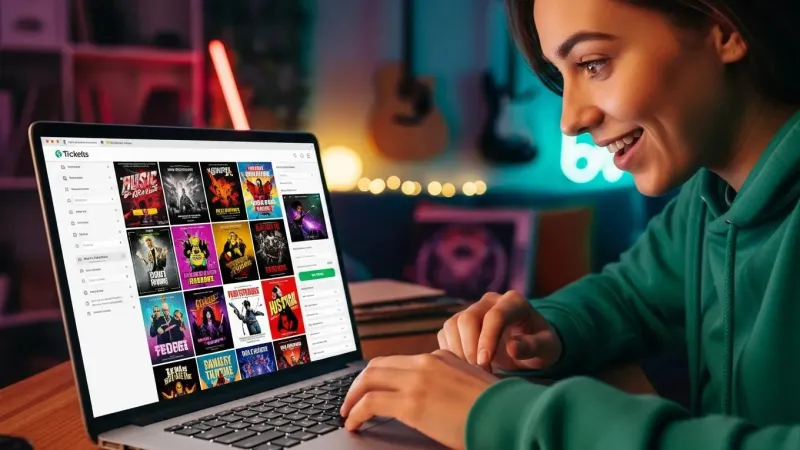
Photo: person buying concert tickets on laptop at home evening, via www.couchconcert.com
Ask ten people when the best time to buy tickets is and you'll get ten versions of the same answer: "early." But early isn't a strategy — it's a vibe. What actually moves ticket prices week to week is a rhythm most fans never see, and once you understand it, you'll stop panic-buying at 11 PM on a Friday.
The Week Has a Pulse
Here's the broad shape of it. Monday and Tuesday are the quiet days. Sales teams are back from the weekend, marketing pushes get scheduled, and — this is the key part — demand is at its lowest point. Nobody's scrolling for Saturday night plans on a Tuesday lunch break. Lower demand means dynamic pricing algorithms have less reason to spike, and resale sellers who listed over the weekend start getting nervous about seats sitting still.
Wednesday through Friday, the picture flips. Weekend events are suddenly imminent, group chats start firing, and impulse demand kicks in. That's when prices climb — not because the tickets got better, but because the buyer got more desperate.
Weekends are the worst time to buy for an event that's happening that same weekend. You're competing with everyone else's FOMO, and the algorithms know it.
Why Inventory Drops When It Drops
Ticket releases aren't random, either. Venues and promoters tend to release held seats, production holds, and new inventory blocks early in the week — Monday and Tuesday especially. Production holds get released once the promoter confirms what the stage setup actually requires, and that often happens mid-week before a weekend show.
So Tuesday isn't just a low-demand day. It's frequently a new supply day. More inventory plus fewer buyers equals leverage, and leverage equals savings. It's the closest thing to a cheat code the ticket market offers.
The 48-Hour Playbook
Here's a practical framework you can run on your next purchase:
- 48 hours before you buy, browse. Note the price of your target seat on whatever platform you're using. Screenshot it. That's your baseline.
- Buy on a Tuesday or Wednesday if the event is more than a week out. You're shopping against an empty room.
- Avoid Friday evening and Saturday for resale purchases. Peak FOMO hours. Sellers know it and price accordingly.
- Check again Tuesday of event week. For events that aren't selling out, this is often when resale prices soften one last time as sellers try to salvage something rather than eat the seat.
- Ignore the myth that waiting always wins. Hot shows — a stadium tour with a real shortage — only go up. The 48-hour rule is for the 80% of events that aren't instant sellouts.
A Quick Reality Check
None of this is a guarantee, and anyone who tells you there's a magic hour is selling something. Pricing algorithms are fed by dozens of signals — search volume, sales velocity, comparable events, even the weather forecast. But day-of-week demand is one of the most consistent, most exploitable patterns in the whole system, and it costs you nothing to use it.
Set a calendar reminder for a Tuesday. Browse calmly. Buy before the weekend crowd wakes up. Your wallet will notice the difference — even if your group chat never finds out.